
When I introduce Sustainable UX in a training room, I usually begin with a simple question:
“Who here thinks their digital product has an environmental footprint?”
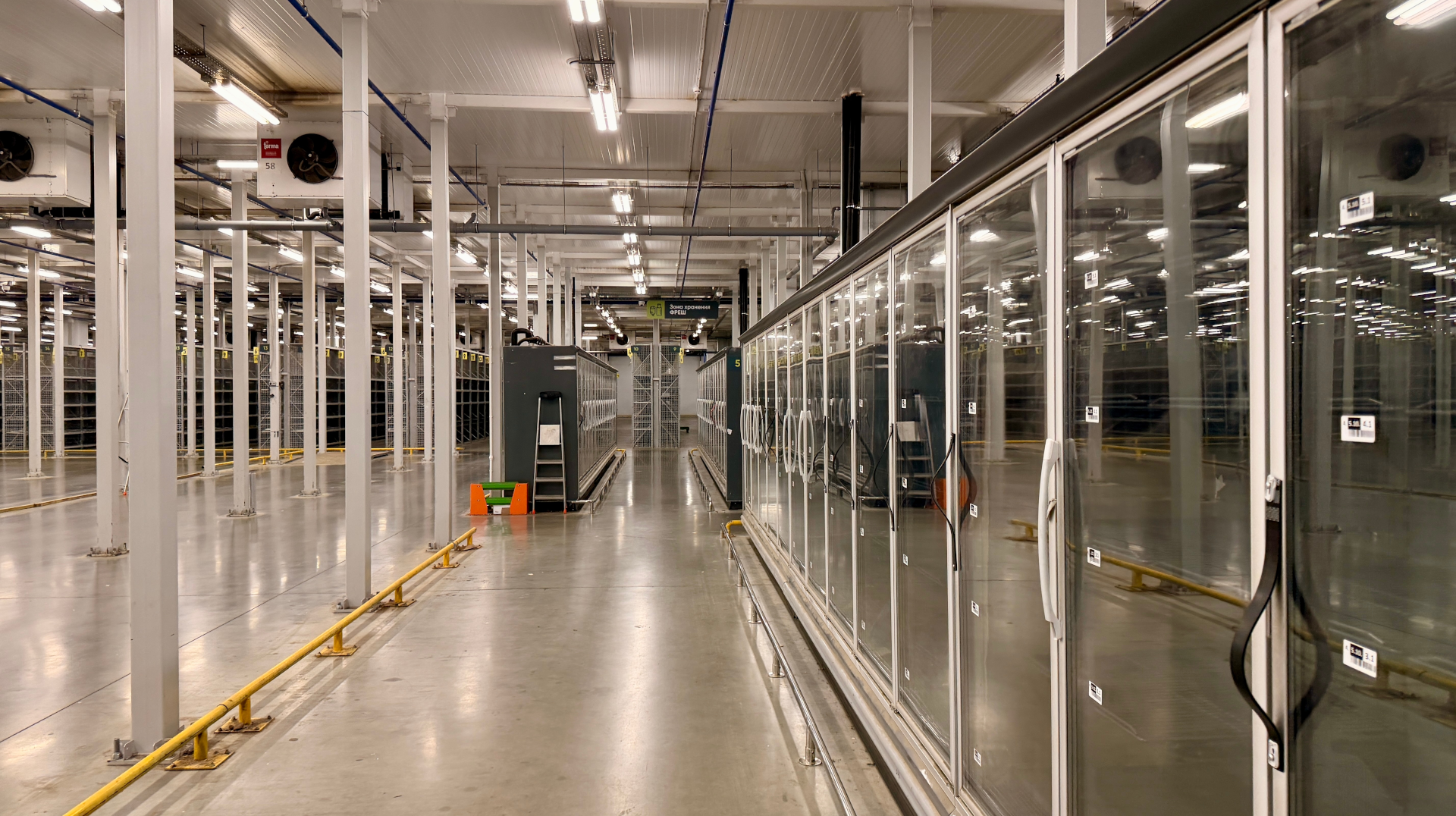
There is always a pause. Not because people don’t care, but because we rarely think of digital work in physical terms. Sustainability conversations typically revolve around mobility, construction, food systems, and energy grids. We picture factories and transport routes. We don’t picture wireframes. But digital systems are physical. They rely on servers, cooling systems, networks, rare earth materials, and electricity. The cloud is not something ephemeral – it is a physical infrastructure.
Sustainable UX begins with acknowledging that our digital decisions scale. They repeat thousands or millions of times. And over time, small design choices accumulate into measurable environmental and social impact.
The Digital World Is Not Weightless
According to the International Energy Agency (IEA, 2023), data centres account for approximately 1–1.5% of global electricity consumption globally. That percentage may seem manageable until we consider the accelerating demand from streaming services, remote work, AI systems, and cloud storage.
Figure 1. Data centre electricity consumption by region, Base Case, 2020-2030
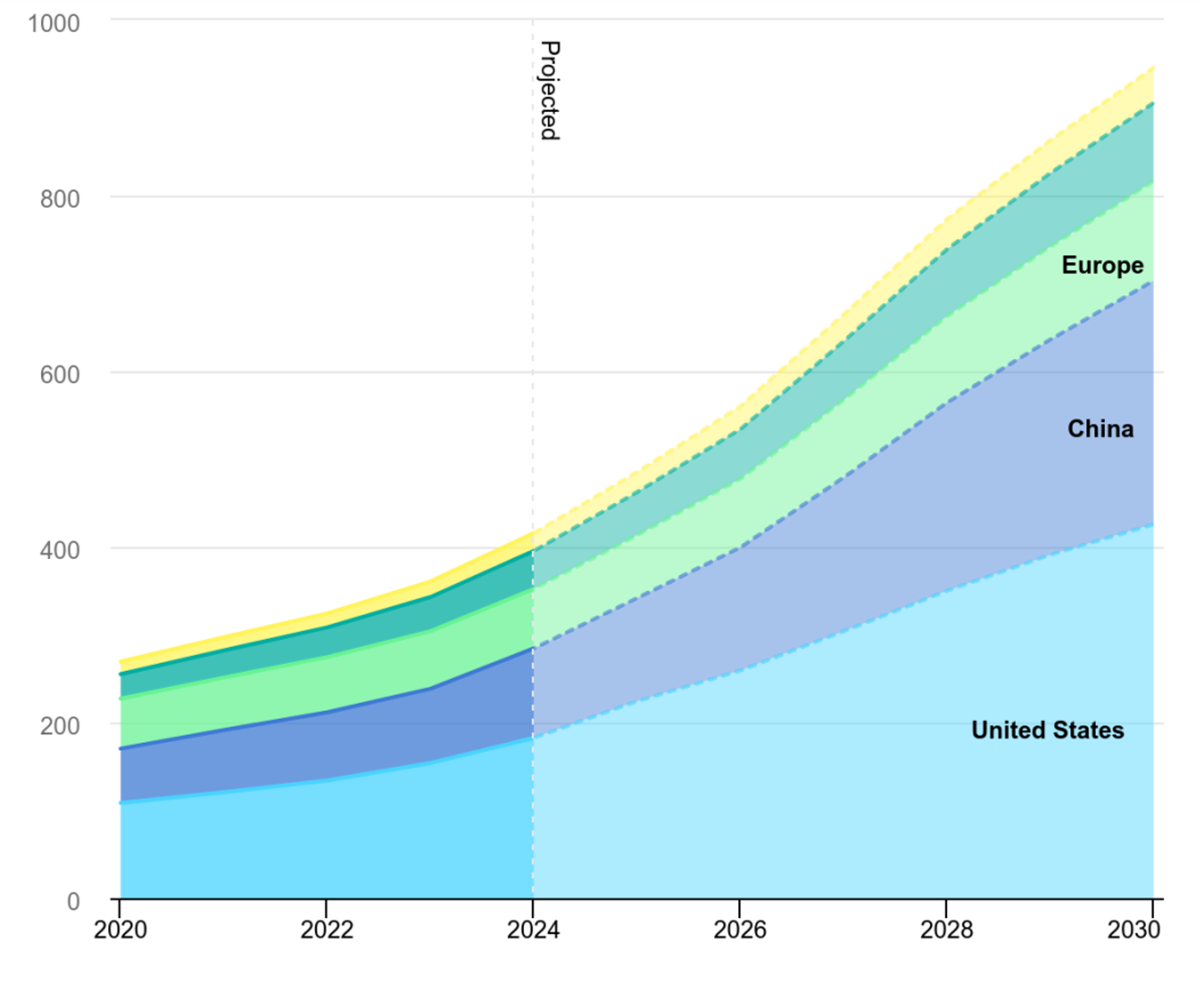
Source: International Energy Agency (IEA), Data Centres and Data Transmission Networks, 2023.
Additionally, the Shift Project (2019) estimated that digital technologies contribute roughly 3-4% of global greenhouse gas emissions in 2019, which is comparable to the aviation industry. It was also predicted that Greenhouse Gas (GHG) emissions will continue increasing by up to 8% by 2026.
Digitalization brings undeniable efficiency gains. But it is not immaterial. Every megabyte transferred requires energy. Every feature maintained requires infrastructure.
In training rooms, this is often the moment where sustainability becomes less abstract. Participants begin to see their digital work as part of a larger system.
Performance Is Environmental Strategy
One of the most reassuring insights for teams is this: performance optimization is sustainability.
Google research demonstrates that as page load time increases from one to three seconds, the probability of bounce (visitors leaving a website) increases significantly (Google/SOASTA, 2017).
Figure 2. Impact of page load time on bounce rate
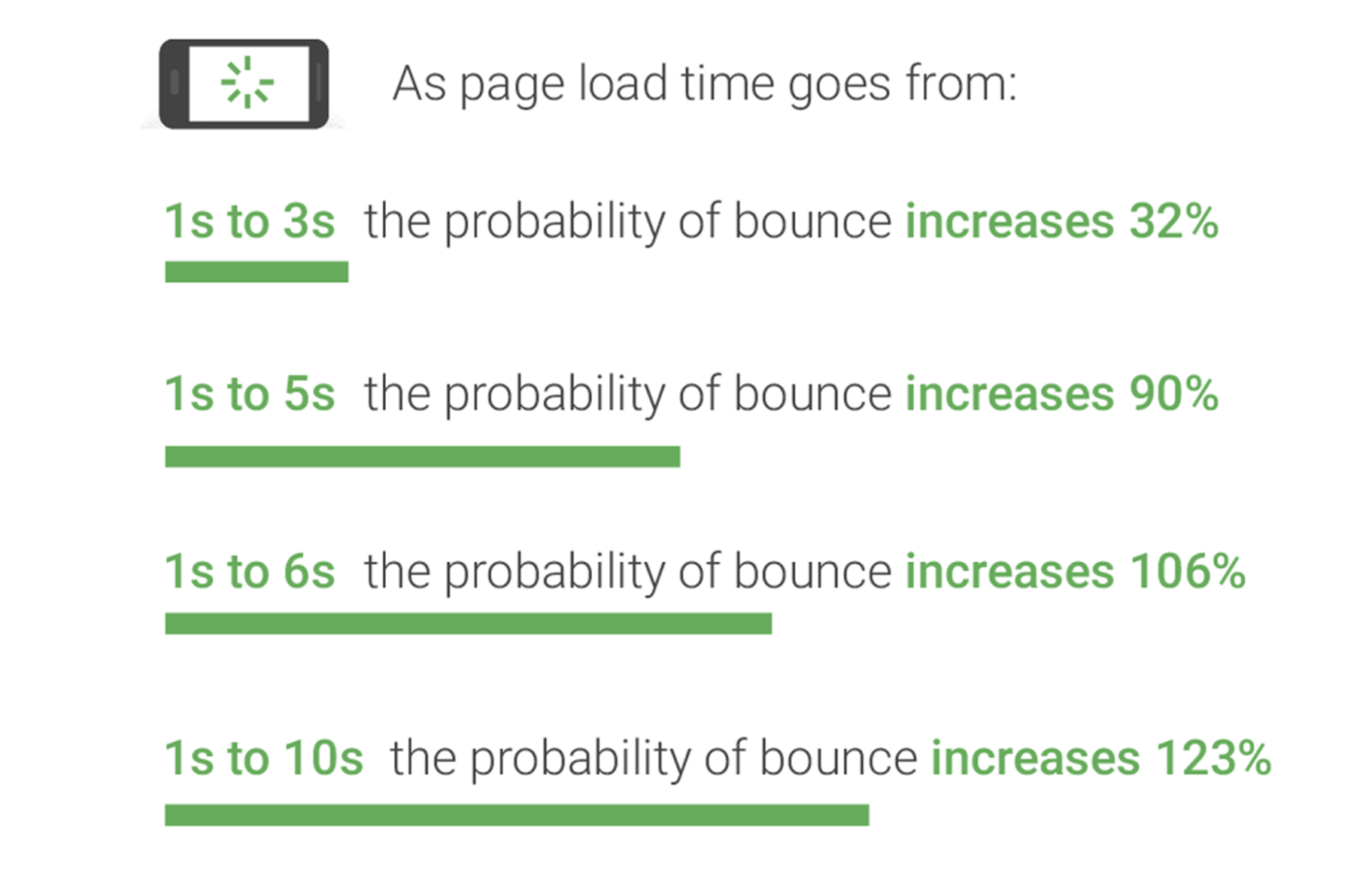
Source: Google/SOASTA Research, 2017.
When a website is lighter and faster, it is a win-win situation for all the sides involved:
- It improves user experience.
- It increases engagement.
- It reduces server load.
- It decreases energy use per visit.
This alignment is powerful. Sustainable UX does not require sacrificing business goals. In many cases, it reinforces them.
Reducing unnecessary animations, compressing images, and limiting third-party scripts – these are not aesthetic compromises. They are design decisions with environmental implications.
Why Lifecycle Thinking Matters in Digital Design
In many sustainability discussions, lifecycle assessment (LCA) is a core concept. It evaluates a product from raw material extraction through manufacturing, distribution, use, and disposal.
Digital products also have lifecycles – even if they feel intangible.
They are:
- Designed.
- Developed.
- Hosted.
- Maintained.
- Updated.
- Eventually retired (or forgotten).
Yet we rarely design with the end in mind.
Lifecycle thinking in UX means asking:
- What infrastructure supports this feature long-term?
- How long will we maintain this data?
- Are we creating dependencies that increase energy demand indefinitely?
- What happens when this service is discontinued?
- What happens to old scripts when the website is updated?
In the book “User Experience in the Age of Sustainability: A Practitioner’s Blueprint”, the author, Kem-Laurin Kramer, argues that sustainability requires systems thinking, meaning that understanding interconnections and long-term consequences is crucial (Kramer, 2012). Digital systems are ecosystems. They interact with devices, networks, behaviours, and energy grids.
When we add features without questioning necessity, we extend lifecycle energy costs. When we fail to archive or decommission outdated systems, we create digital waste.
Lifecycle thinking shifts our mindset from “launch” to “longevity.”
Circular Economy: What Does It Mean for Digital Design?
The circular economy challenges the traditional “take–make–dispose” model. Instead of linear consumption, it promotes regeneration, reuse, repair, and extended value cycles.
In physical products, this might mean modular design, recyclable materials, or product-as-a-service models.
In digital environments, circular thinking translates differently, but it still applies.
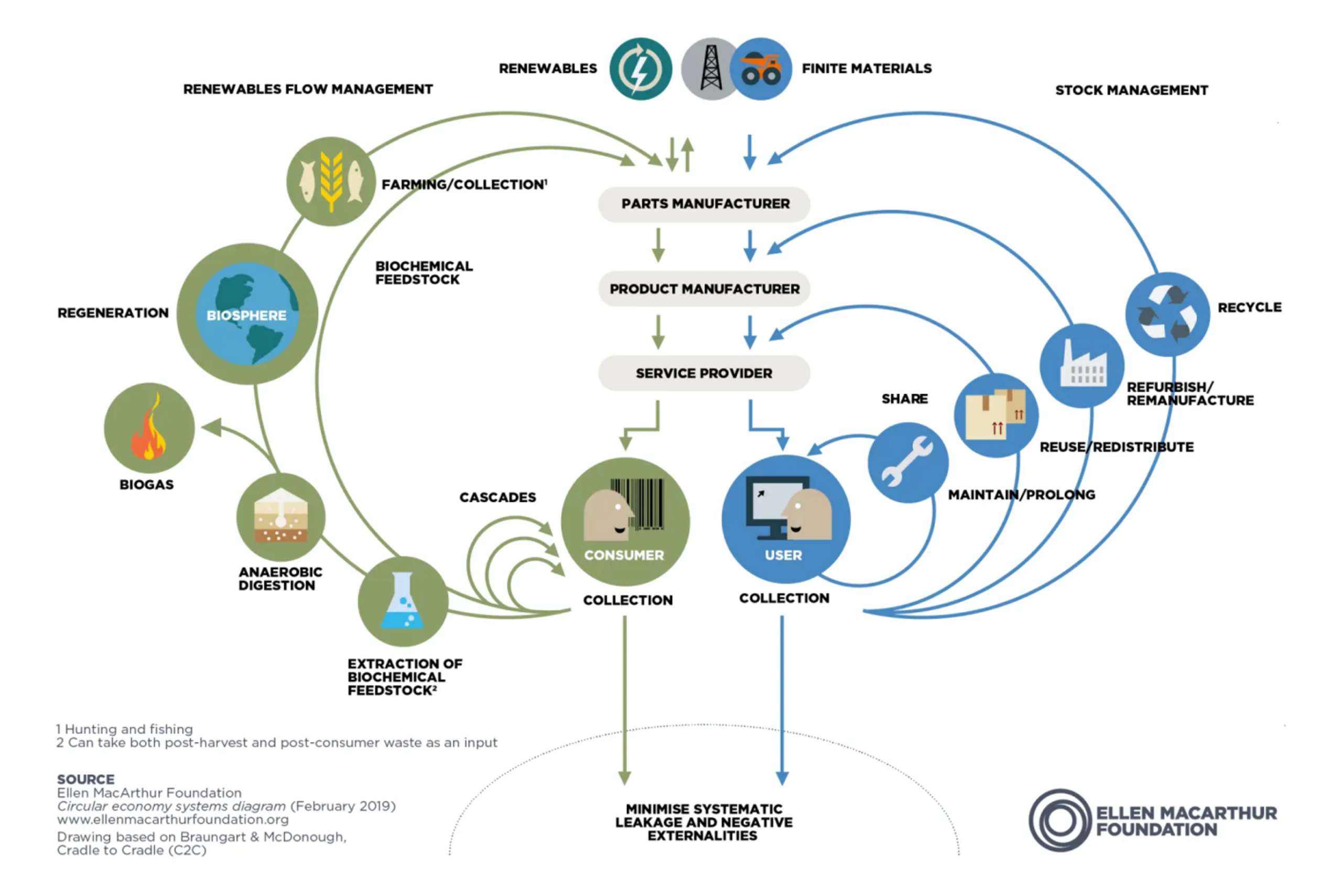
The Ellen MacArthur Foundation defines circular economy principles as designing out waste and pollution, keeping products and materials in use, and regenerating natural systems. The Butterfly diagram below shows the circular production cycle in detail.
Figure 3. Circular economy systems diagram (2019).
Digital circularity can include:
- Designing modular systems that evolve instead of being replaced.
- Reducing forced device upgrades through lightweight applications.
- Minimizing digital clutter and redundant storage.
- Building adaptable platforms rather than disposable microsites.
Design has a direct influence here.
If we create software that only runs on the newest hardware, we indirectly accelerate device turnover. That increases manufacturing emissions and electronic waste.
If we design scalable systems that remain functional across device generations, we support circular principles.
Circular thinking in digital design is not about recycling pixels. It is about extending functional lifespan.
Sustainability and Universal Access
Accessibility is often framed purely as compliance. But it is also sustainability.
If a product works on older devices and slower networks, users are not forced to upgrade hardware. If it is accessible to diverse users, it avoids exclusion.
Social sustainability and environmental sustainability are interconnected.
A platform that excludes part of the population is not sustainable long-term. Nor is a system that requires constant hardware replacement.
Designing for universal access extends lifespan and reduces waste. It also aligns with broader corporate responsibility goals.
When Measurement Changes Behaviour
In training, the turning point often comes when participants measure their own websites using tools like:
- Website Carbon Calculator
- Sustainable Web Design Model (Wholegrain Digital)
- Google Lighthouse
Seeing emissions per page view makes the impact tangible.
Figure 4. Carbon emissions per page view estimation model.
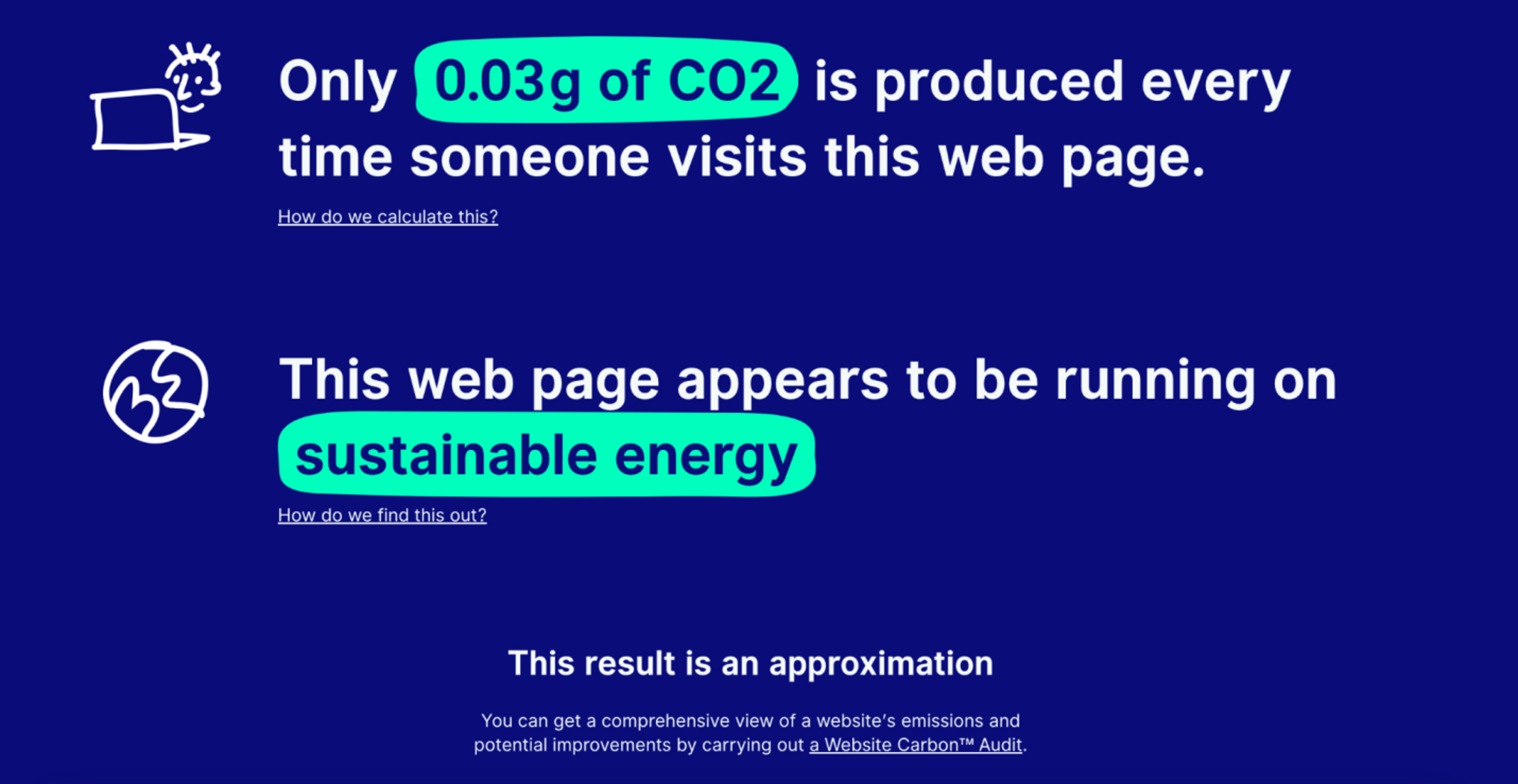
Source: Wholegrain Digital – Sustainable Web Design Model.
The Sustainable Web Design model estimates carbon based on data transfer size, energy intensity of networks, and energy source carbon intensity.
The results are approximate and, of course, not yet perfect. But it introduces accountability.
Measurement transforms sustainability from abstract aspiration into measurable improvement.
Behavioural Impact: Design as Influence
Sustainable UX is not only about energy efficiency. It is about behaviour. Digital design shapes decisions, very often subtly.
The global research and innovation consultancy Behavioural Insights Team has demonstrated how even small interface changes influence sustainable choices. Defaults matter. Visual emphasis matters. If sustainable options are visible and easy, adoption increases.
Designers, product managers, and developers are therefore not neutral actors. They influence patterns of consumption.
Sustainable UX asks us to use that influence responsibly.
The AI Dimension
Writing this article about Digital Sustainability in 2026 and not including AI in the discourse would be unimaginable. Undoubtedly, artificial intelligence complicates the sustainability conversation.
It is possible for AI to contribute to sustainable development by optimizing systems and helping to reduce waste. But training large AI models requires significant energy. Strubell et al. (2019) highlighted the carbon cost associated with training large NLP models.
AI is neither inherently sustainable nor unsustainable.
The key lies in intentional use:
- Choosing appropriate model sizes.
- Avoiding unnecessary computational redundancy.
- Optimizing prompts and workflows.
- Considering infrastructure sources.
As digital systems evolve, Sustainable UX must evolve with them.
The Cultural Reality
In nearly every training, someone raises a practical concern:
“We don’t have time for this.”
“Our stakeholders don’t ask for this.”
“It’s not in our KPIs.”
Sustainable UX cannot rely solely on individual awareness. It requires structural support.
Embedding sustainability into digital workflows might include:
- Adding performance benchmarks into project acceptance criteria.
- Including sustainability checkpoints in design reviews.
- Reporting digital efficiency metrics internally.
- Choosing greener hosting providers when possible.
Trainings create awareness. Organizations sustain impact.
Why This Matters Beyond UX
You do not need to be a designer to influence digital sustainability.
Every employee who works digitally shapes infrastructure demand.
Every large email attachment.
Every redundant shared folder.
Every unnecessary auto-play video in a presentation.
These may feel insignificant individually. But sustainability operates cumulatively. Every small step counts, because it defines our behavioural pattern.
Digital work is invisible. Its footprint is not.
Final Reflection
At the end of Sustainable UX training, I ask participants to write down one small change they will make.
The answers are rarely dramatic.
“Compress images.”
“Measure page weight.”
“Talk to IT about hosting.”
“Rethink default settings.”
Sustainable UX is not about redesigning the internet overnight. It is about recognizing that digital design decisions are part of material systems.
Lifecycle thinking encourages longevity. Circular economy principles encourage regeneration. Accessibility ensures inclusion. Performance optimization reduces waste.
The digital world is not weightless.
And sustainable design begins with acknowledging that our work, however invisible, carries responsibility.
References Consulted:
- International Energy Agency (2023). Data Centres and Data Transmission Networks.
- The Shift Project (2019). Lean ICT – Towards Digital Sobriety.
- Ellen MacArthur Foundation. Circular Economy Overview.
- Google/SOASTA (2017). The State of Online Retail Performance.
- Wholegrain Digital. Sustainable Web Design Model.
- Kramer, K.-L. (2012). User Experience in the Age of Sustainability.
- Strubell, E., Ganesh, A., McCallum, A. (2019). Energy and Policy Considerations for Deep Learning in NLP.